

Viticulture Bulletin – Spring 2026
Synopsis
Following the wettest winter of the last decade, the first half of spring was moderately wet with rainfall in April and May close to the monthly averages. The season was very warm with well above average temperatures recorded in the three-month period covered in this bulletin. Two heat waves were recorded during the second half of June, with their effect compounded by a pronounced drop in rainfall in the Cima Corgo (the Douro Superior quintas faired a little better). The highest temperature of the month in Portugal was recorded at Pinhão: 42.7°C on June 21. A combination of high temperatures and reasonable soil water availability brought forward the vegetative cycle as never before. It is the most precocious cycle since we began taking records, reflected in both the earliest ever recorded flowering and veraison (‘pintor’).
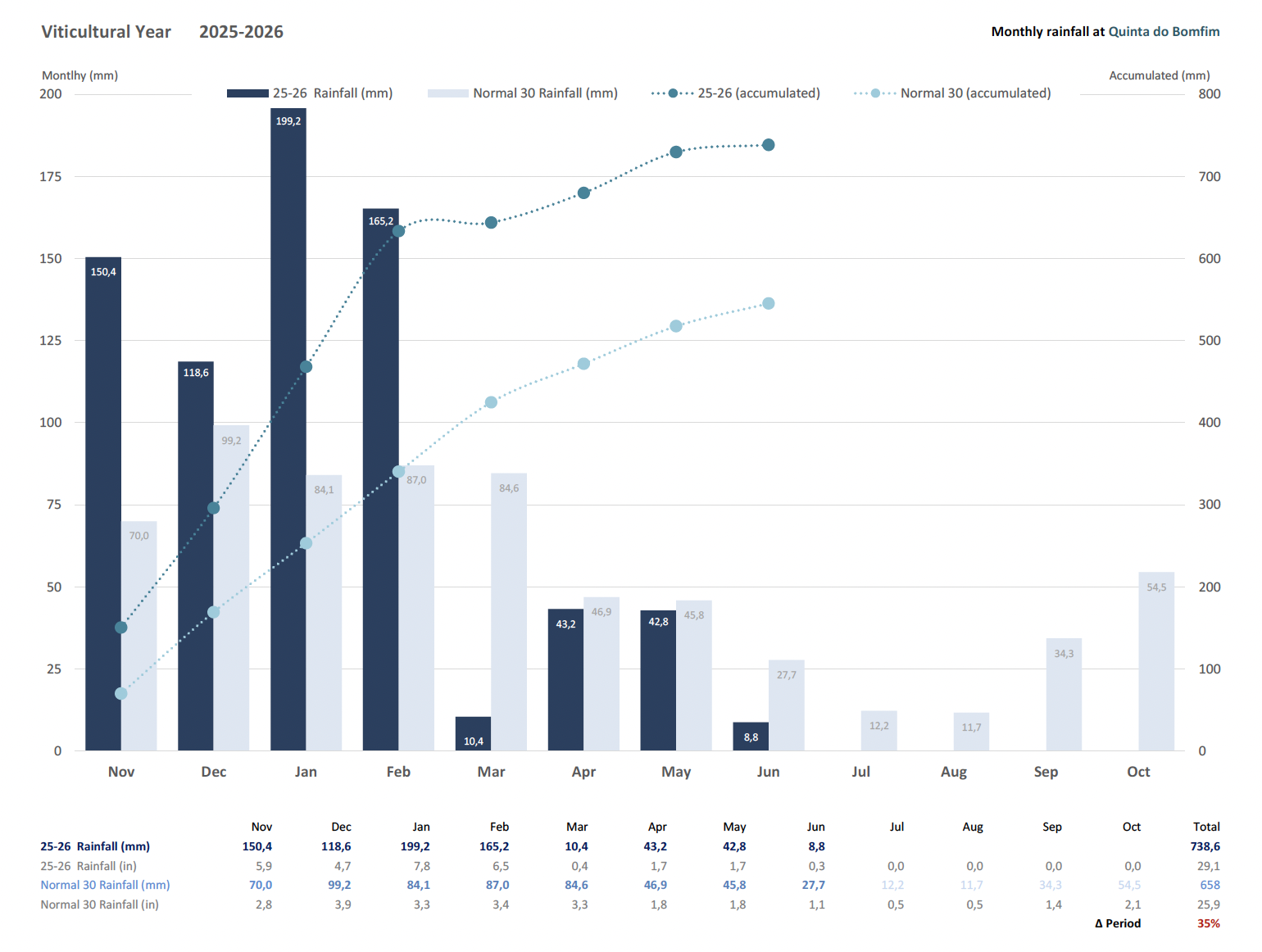
Fig.1: Quinta do Bomfim – Viticultural Year 2025/26 – Monthly rainfall
Temperatures in April were significantly above the monthly average in all three regions where we operate, the most noticeable deviations from the mean being recorded at Cavadinha (+3.7°C), Fonte Souto (+3.6°C), Bomfim (+2.6°C) and Casa de Rodas (+2.5°C). At Pinhão, in the heart of the Douro, heat wave conditions persisted for almost the entirety of two consecutive weeks. Rainfall was closer to (or higher than) average in our Douro Superior quintas than in the Cima Corgo properties.
In May, rainfall was likewise closer to average in the Douro Superior than in the Cima Corgo, while temperatures across the region remained generally well above average. These conditions accelerated vegetative growth and brought the cycle forward substantially. Although soil water availability was inevitably lower than at the end of April, the readings at the end of May still indicated 24% - the second-best year for soil water content at this stage in the cycle.
June was substantially hotter and drier than usual in the three regions where we are present, every single one of our vineyard weather stations recording positive temperature departures from the mean; notably Fonte Souto (+4.5°C), Cavadinha (+3.6°C), Bomfim (+3.0°C) and Malvedos (+2.5°C). There were a series of heat waves throughout the country, with the Douro experiencing two in quick succession during the second half of the month. However, on a more positive note, all our weather stations registered good levels of accumulated rainfall for the period of the viticultural year. Quinta do Bomfim, for example, had accumulated 739 mm by the end of June, when the 30-year average is 545 mm for the comparable period (a full viticultural year’s rainfall at Quinta do Bomfim — 30-year average — is 658 mm).
Not a single drop of rain was recorded in June at Quinta da Fonte Souto in Portalegre, Alentejo while at Casa de Rodas in the Monção e Melgaço Vinho Verde subregion, we had five times less rain (just 10.2mm) than the 30-year average.
Flowering
Flowering came very early this year, the earliest that we have ever recorded —15 days ahead of average dates and more than 20 days earlier than in 2025. The dates at Bomfim were April 25 for both the Touriga Franca and the Touriga Nacional and April 29 for the two varieties at Quinta do Ataíde.
‘Pintor’ (veraison)
Given that the pace of flowering progressed swiftly, the pintor also arrived much sooner than normal, again the earliest we have ever recorded. The starting dates for Bomfim were June 29 for the Touriga Franca and July 11 for the Touriga Nacional, and the corresponding dates for Ataíde were July 4 and July 11, respectively.
Soil water availability (Douro)
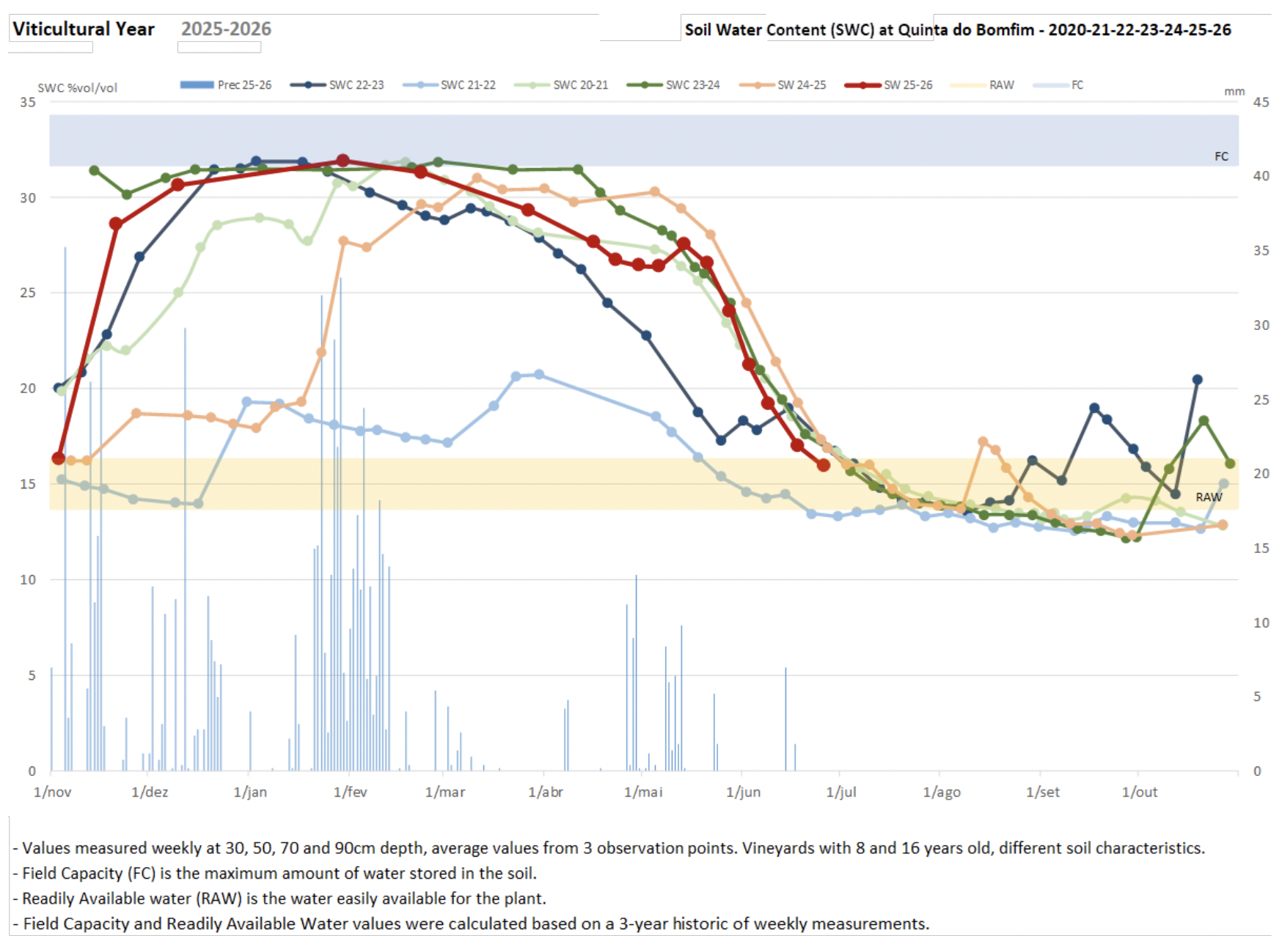
Given the negligible rainfall in June across most of our Douro properties, allied to rapid vegetative growth and high temperatures, there was a pronounced dip in soil water content. At the end of June, our probes at Bomfim showed SWC readings of 15.9%, which is just a fraction above the threshold for readily available water, in other words the water that is easily available to the vines. This represented a sharp drop from the end of May reading: 24% (see figure 2 below). Only in 2022, an exceptionally dry year, did we record a lower reading at this stage of the cycle.
Fig.2: Quinta do Bomfim – Viticultural Year 2025/26 – Soil Water Content
Fernando Alves, Miguel Potes and Joana Valente · July 20, 2026
